
Sequoyah: Cherokee Language Pioneer
Cherokee History, Cultural Landmarks
Sequoyah: The Blacksmith Who Forged a Written Voice for the Cherokee
Visit the Sequoyah’s Cabin Museum and step into the life of the blacksmith, silversmith, trader, and visionary who gave the Cherokee Nation the enduring gift of written language.
From Workshop Experiments to a Written Language
In the early 1800s, Sequoyah began painstaking experiments at his workbench, testing symbols that could capture the sounds of spoken Cherokee. After years of trial and error, he created the Cherokee syllabary, a set of characters so intuitive that thousands learned to read within a few years, transforming communication, education, and record-keeping across the Cherokee Nation.
A Life on the Move: Arkansas to Big Skin Bayou
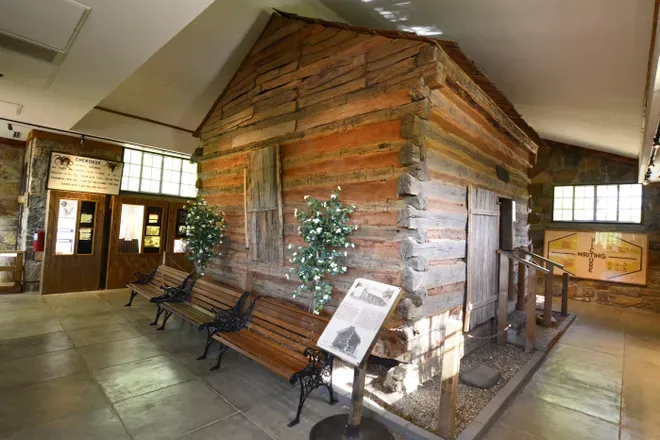
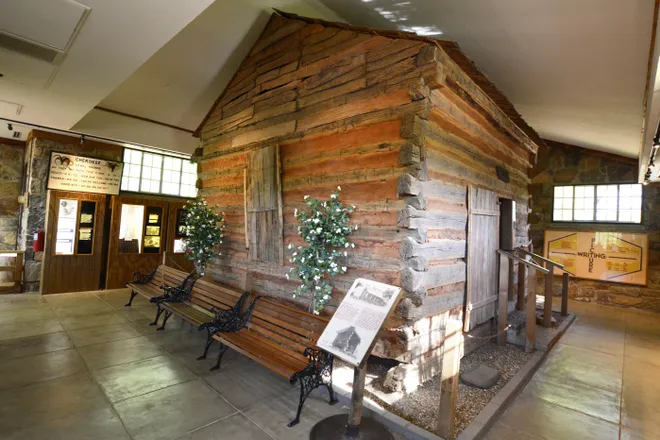
In 1818, Sequoyah moved west to Arkansas, where he worked in salt production and continued his blacksmith trade, supporting his family while refining his ideas. A decade later, in 1828, he traded property on Big Skin Bayou Creek, in what is now Sequoyah County, Oklahoma. Here, in 1829, he built the log cabin that still stands today, preserved as a National Historic Landmark.
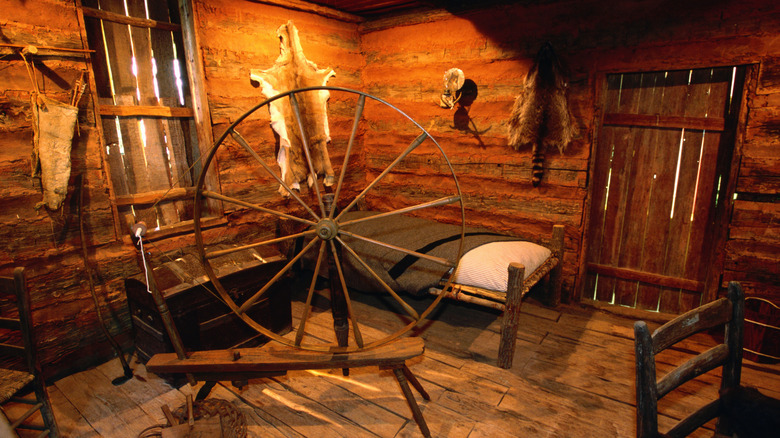
Inside the cabin, visitors connect Sequoyah’s everyday tools to his extraordinary intellectual legacy.
Plan Your Visit to Sequoyah’s Cabin Museum
The cabin is open to the public Wednesday through Saturday, 10:00 a.m. to 4:00 p.m. (closed Sunday–Tuesday and on major holidays). From Sallisaw, travel seven miles northeast on State Highway 101; clear signs guide you to the entrance and parking area near the grounds.
Standing beneath the cabin’s hand-hewn beams, you’re reminded that one individual—working as a blacksmith, silversmith, and trading post owner—reshaped an entire nation’s future. Sequoyah’s syllabary preserved Cherokee stories, laws, and identity, and his Oklahoma homestead remains a powerful place to reflect on resilience, language, and cultural survival.


