
Explore Oklahoma's History at 14 Flags Museum
Oklahoma History, Heritage Travel, Cultural Landmarks
The 14 Flags Museum in Sallisaw: A Small Town Gateway to Oklahoma’s Big History
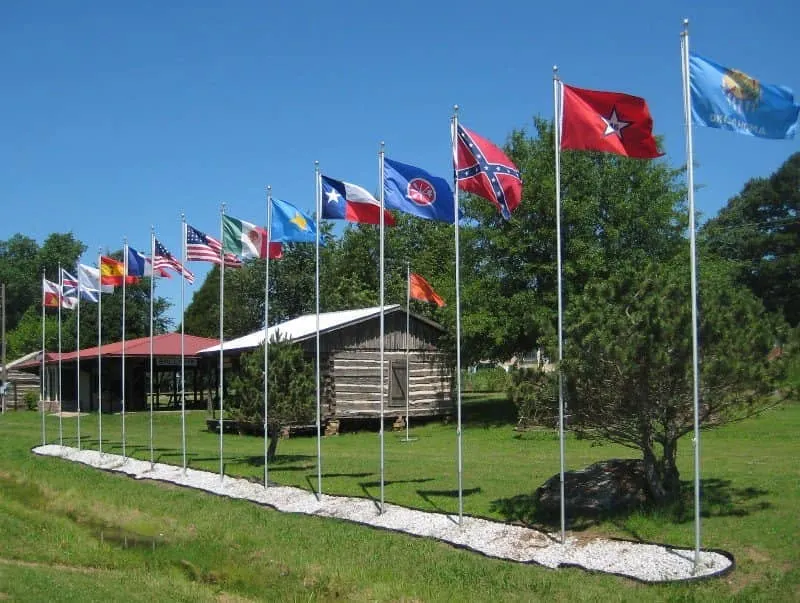
Tucked beside the railroad tracks in Sallisaw, Oklahoma, the 14 Flags Museum offers a surprisingly powerful journey through centuries of regional and state history. From hand-hewn log cabins to the Old Sallisaw Train Depot and a striking display of historic flags, this site tells a layered story of Native nations, European empires, American expansion, and modern Oklahoma identity—all in one walkable, open-air setting.
A Trackside Time Capsule: Historical Significance of the 14 Flags Museum
The 14 Flags Museum is more than a collection of old buildings. It is a carefully preserved snapshot of the forces that shaped eastern Oklahoma: Indigenous homelands, forced removal, frontier law and commerce, the coming of the railroad, and the gradual emergence of Oklahoma as a state with its own distinct identity. Situated along the railroad tracks that once carried people, goods, and ideas across Indian Territory, the museum links local stories in Sallisaw to the larger currents of American history.
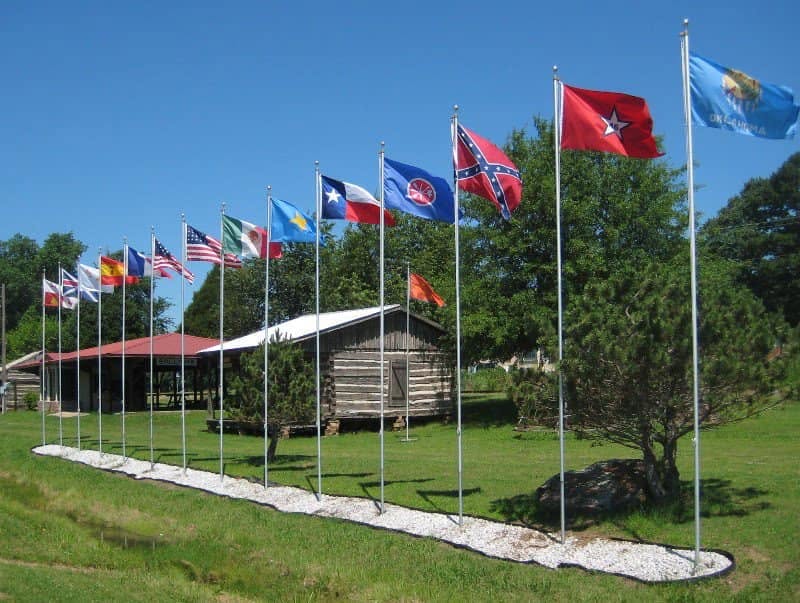
Its name comes from the 14 different flags that have flown over what is now Oklahoma, representing the many governments and powers that claimed, governed, or influenced this land over nearly five centuries. By pairing those flags with original structures like the Lattimore Cabin, the Franklin Faulkner Cabin, and the Old Sallisaw Train Depot, the museum transforms abstract dates and names into tangible, human-scale experiences.
📌 Key Takeaway: The 14 Flags Museum compresses centuries of political change, cultural exchange, and local daily life into one compact site that is easy for visitors of all ages to explore.
The Lattimore Cabin (1835): Frontier Life on the Edge of Change
One of the museum’s most compelling structures is the Lattimore Cabin, built in 1835. That date alone places it in a pivotal era. The 1830s were a decade of upheaval in this region: federal Indian removal policies were uprooting Cherokee, Choctaw, Creek, Chickasaw, and Seminole peoples from their southeastern homelands and pushing them west into what would become Oklahoma. At the same time, traders, missionaries, and early settlers were establishing outposts and homesteads along new routes and river crossings.
The Lattimore Cabin stands as a rare surviving witness to this era. Its hand-hewn logs, simple floor plan, and utilitarian furnishings show what daily life looked like on the frontier. Visitors can imagine the realities of cooking over an open hearth, enduring harsh winters with limited supplies, and watching as new neighbors—many of them newly arrived Cherokee families—built homes of their own nearby. This cabin bridges the worlds of early American settlers and the Indigenous nations whose lives were being permanently reshaped at the same time.
💡 Reflection: Standing inside the Lattimore Cabin, it is easier to grasp that “history” was once just ordinary people trying to make a home in uncertain times.
Judge Franklin Faulkner’s Cabin (1840s): Law, Commerce, and Community
A second cabin on the grounds was built in the 1840s by Judge Franklin Faulkner, an influential early settler and community leader. By the time Faulkner constructed his cabin, the region was transitioning from a raw frontier to a more organized society, with courts, trading posts, and emerging towns. Faulkner’s role as a judge symbolized the growing presence of formal law and governance in an area still widely known as Indian Territory.
The cabin itself reflects this shift. While still modest by modern standards, it suggests a measure of stability and status. Visitors can picture legal disputes settled at a rough-hewn table, neighbors coming to discuss land, livestock, or local news, and the gradual weaving together of a community that included both Native and non-Native residents. In this way, the Faulkner Cabin represents not just one man’s home, but the slow creation of civic life in eastern Oklahoma.
Together, the Lattimore and Faulkner cabins show how, in just a decade, this landscape moved from scattered homesteads and removal routes toward recognizable towns and institutions—long before Oklahoma would officially join the Union in 1907.
Artifacts from the Trail of Tears: Remembering Forced Removal
One of the most moving aspects of the 14 Flags Museum is its collection of artifacts connected to the Trail of Tears. The term refers to the forced removal of thousands of Native people—especially the Cherokee, but also other Southeastern tribes—who were driven from their ancestral homelands and marched west to Indian Territory under brutal conditions in the 1830s and beyond. Many of the routes they traveled passed through or near present-day Sallisaw and the surrounding Sequoyah County area.
The museum’s artifacts, which can include everyday items such as tools, household goods, and personal belongings, bring this history down to a deeply human scale. Instead of seeing the Trail of Tears only as a line on a map or a paragraph in a textbook, visitors encounter objects that people carried, used, or left behind. Each piece hints at a larger story of loss, resilience, and cultural survival. Together with interpretive materials, the collection honors the memory of those who endured removal and reminds visitors that Oklahoma’s story is inseparable from the story of Native nations who still live here today.
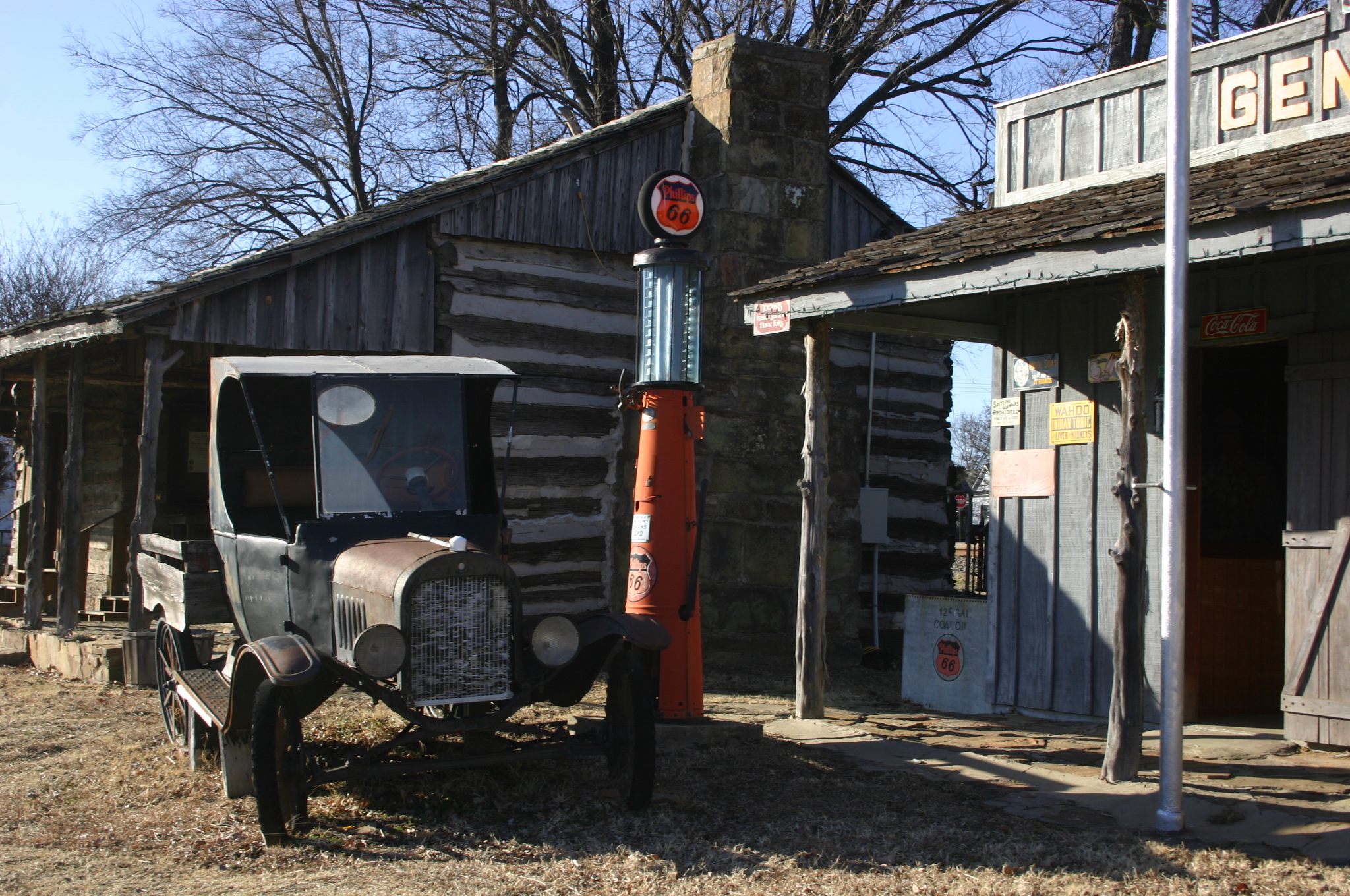
Everyday objects from removal-era families turn abstract tragedy into personal, relatable stories.
⚠️ Important Context: The Trail of Tears is not a side note in Oklahoma history—it is a central chapter. The 14 Flags Museum helps ensure it is remembered with honesty and respect.
The Old Sallisaw Train Depot: Rails That Reshaped a Region
If the cabins tell the story of early settlement and removal, the Old Sallisaw Train Depot tells the story of what happened when the railroad arrived. Located along the same tracks that still define the museum’s setting, the depot was once a lifeline for Sallisaw and surrounding communities. Trains brought mail, manufactured goods, and new residents; they carried out crops, livestock, and local products to markets far beyond Indian Territory.
Architecturally, the depot reflects a more connected, industrial age. Its design contrasts with the rough-hewn cabins, signaling the arrival of timetables, telegraph lines, and a faster pace of life. For many residents, the depot was their first glimpse of the wider world—a place where they could watch locomotives from distant cities roll in, meet travelers, and send or receive news from hundreds of miles away. In this sense, the depot symbolizes Sallisaw’s transition from isolated frontier community to a modern Oklahoma town plugged into national networks of commerce and culture.
Today, preserved as part of the 14 Flags Museum, the Old Sallisaw Train Depot invites visitors to imagine the hiss of steam, the clang of metal wheels, and the excitement of arrivals and departures that once defined daily life along these tracks.
The 14 Flags: A Visual Timeline of Power, Identity, and Change
The museum’s name and its most eye-catching feature come from the 14 flags that have flown over the land we now call Oklahoma. These flags represent a complex succession of rule and influence: Native nations, European empires, shifting colonial alliances, the United States, the Confederacy, and finally the State of Oklahoma itself. Seeing these banners together, rather than in isolation, helps visitors grasp just how many layers of sovereignty and culture have shaped this region.
The Royal Standard of Spain (circa 1541): Early European Claims
Among the earliest flags represented is the royal standard of Spain, circa 1541. In the mid-16th century, Spanish explorers such as Francisco Vásquez de Coronado ventured into the Great Plains and parts of what would later become Oklahoma. While Spain’s presence here was limited and often short-lived, its claim marked one of the first European attempts to assert control over these lands. The royal standard symbolizes a time when European powers viewed the continent as a map of territories to be claimed, often without regard for the Native nations already living here.
The Great Union of Great Britain (circa 1663): Empires in Competition
Another key banner is the great union of Great Britain, circa 1663, an early version of the Union Jack. This flag reflects the growing reach of British power in North America and the broader struggle between European empires for control of land and trade. Although British influence in the interior was often indirect—reaching this region through alliances, trading networks, and conflict with other colonial powers—it still shaped the geopolitical environment in which Native nations and later American settlers had to navigate their futures.
The Current Oklahoma Flag (1925): A Symbol of Shared Heritage
At the other end of the timeline is the current Oklahoma flag, designed in 1925. This flag is rich with symbolism that reflects the state’s diverse influences. Its central image—a traditional Osage warrior’s shield made of buffalo hide—honors Native heritage. The olive branch and calumet (peace pipe) crossed over the shield represent the desire for peace between cultures. The blue field echoes the color of a flag once carried by Choctaw soldiers who fought for the United States, while the word “Oklahoma” was later added to ensure easy recognition.
Seen in the context of the 14 Flags display, the 1925 Oklahoma flag is more than a modern emblem. It is the latest chapter in a long story of identity, negotiation, and coexistence. Its design consciously weaves together Native and non-Native symbols, acknowledging that the state’s identity is built on both painful histories and shared hopes for the future.
📌 Key Takeaway: From the royal standard of Spain to the modern Oklahoma flag, the 14 flags at the museum form a visual timeline of how power and identity have shifted over this land.
Reflecting Oklahoma’s Rich History and Diverse Influences
What makes the 14 Flags Museum especially meaningful is the way it brings together so many strands of Oklahoma’s past in one coherent experience. Rather than presenting history as a single, simple story, it acknowledges that this region has always been a crossroads—of Native nations, European empires, American settlers, railroad builders, judges, farmers, and families, all leaving their mark on the land and on one another.
The cabins highlight everyday life and local leadership in the 1830s and 1840s. The Trail of Tears artifacts insist that we remember the cost of federal policies and the resilience of Native communities. The Old Sallisaw Train Depot captures the excitement and disruption of industrialization and nationwide connectivity. The 14 flags overhead remind us that the ground beneath our feet has been claimed, governed, and reimagined many times over, yet remains home to people whose stories continue to unfold.
For visitors, this layered approach offers multiple entry points. History enthusiasts can trace political timelines and territorial changes. Families can explore the cabins and depot together, sparking conversations about how people lived before electricity, cars, or smartphones. Those with Cherokee or other Native ancestry may find echoes of family stories in the Trail of Tears exhibits. Rail fans can appreciate the depot’s role in the broader story of American transportation. In every case, the museum invites people to see Oklahoma’s history as both locally grounded and globally connected.
Planning a Visit: Experiencing the Story Firsthand
A visit to the 14 Flags Museum is a reminder that meaningful history does not only live in large, urban institutions. Smaller community museums like this one preserve stories that might otherwise be lost: the exact cabin where a frontier judge lived and worked, the depot that once set the rhythm of daily life, the artifacts that connect present-day residents to the Trail of Tears, and the flags that trace centuries of change. Walking the grounds, you move from one era to another in just a few steps, yet each stop invites you to slow down and imagine the lives lived there.
Whether you are driving through eastern Oklahoma, planning a heritage trip across the state, or looking for an educational outing close to home, the 14 Flags Museum along the Sallisaw railroad tracks is well worth your time. It is a place where the past feels close enough to touch—through weathered logs, worn artifacts, and the shadows of trains that once carried hopes and hardships alike across these tracks.
💡 Pro Tip: Allow enough time to linger inside each cabin, read the interpretive signs, and step back to take in the full row of flags at once. The connections between them become clearer when you see the site as one continuous story.
Why Places Like the 14 Flags Museum Matter
In an age of digital information and fast travel, it can be tempting to think we already “know” history from screens and summaries. Yet there is no substitute for standing inside a structure built in 1835, or tracing your fingers along the worn wood of a depot bench where generations once waited for trains. Places like the 14 Flags Museum preserve not just facts, but textures, sounds, and perspectives that help us understand how people experienced change in real time.
The museum also underscores a broader truth about Oklahoma: this is a state shaped by many hands, many governments, and many cultures. No single flag, cabin, or artifact can tell the whole story. But taken together, they offer a rich, nuanced picture of a place that has been at the center of some of the most significant chapters in American history—from removal and reconstruction to railroads and statehood. The 14 Flags Museum ensures that these stories remain visible, accessible, and alive for future generations.
For anyone curious about how local landmarks can illuminate big ideas, the museum in Sallisaw is a compelling example: a modest site with a far-reaching story, told through cabins, rails, and the flutter of historic flags against the Oklahoma sky.


